
What Warehouse Features Command Higher Lease Rates in Jacksonville
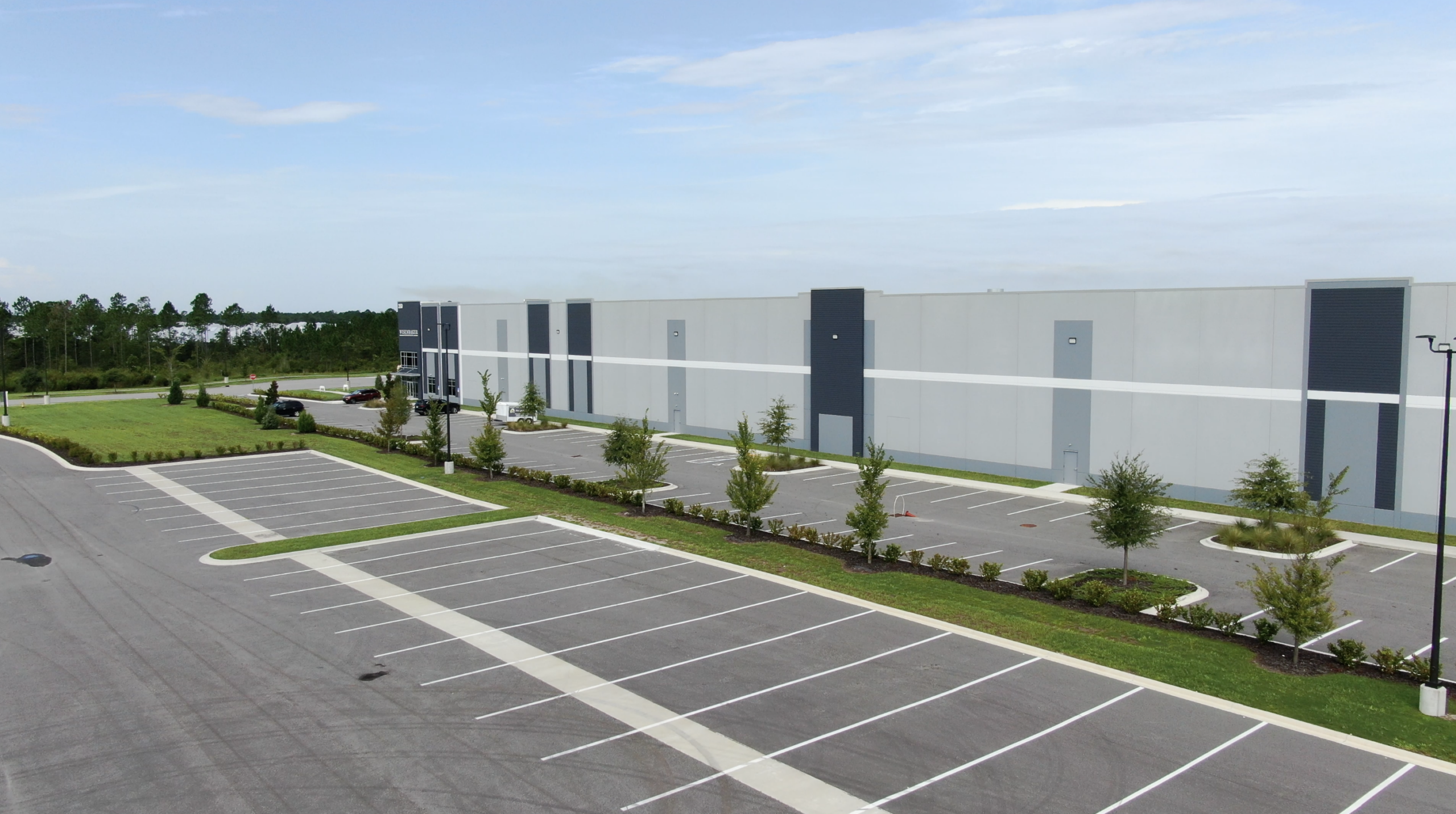
Jacksonville has become one of the Southeast’s premier logistics hubs, and its industrial market has exploded — roughly 22 million square feet added over five years. As tenants sort through options, one question comes up constantly: why do two warehouses of similar size carry very different rents? The answer is in the specs. Here are the features that push industrial space in Jacksonville, FL to the top of the rent range — and why, for the right operation, they are worth paying for.
How Much Is Warehouse Space in Jacksonville Per Sq Ft?
First, the baseline. how much is warehouse space in Jacksonville per sq ft? Average asking rents sit around $11 to $12 per square foot across all classes in 2026, but the range is wide — modern Class A distribution product commands well above that, while older Class C space leases for less. The features below are what move a building from the bottom of that range to the top, and understanding them helps you judge whether a premium is justified or simply a nicer lobby.
Clear Height & Modern Bay Depth
Clear height — the usable vertical space to the lowest overhead obstruction — is the single biggest driver of modern warehouse value. Older buildings often top out around 24 feet; today’s Class A distribution product runs 32 to 40 feet, letting tenants stack far more product on the same footprint. More cubic storage per square foot means lower effective cost, so occupiers willingly pay a premium. Any distribution center in Jacksonville, FL with high clear height and wide column spacing will lease faster and higher than a low-clearance competitor.
The difference is not marginal. Moving from 24-foot to 36-foot clear can increase usable pallet positions by roughly a third without adding a single square foot, which is why experienced tenants treat clear height as a cost-per-pallet question rather than a rent-per-square-foot one. On that basis, the higher-clearance building is frequently the cheaper space to actually operate.
Loading, Dock Doors & Truck Court
How goods move in and out matters as much as how they are stored. Ample dock-high doors, deep truck courts, trailer parking, and cross-dock warehouse configurations all raise a building’s value because they raise throughput. For last-mile distribution space serving fast e-commerce delivery, a high door-to-square-foot ratio is essential — and tenants pay for it. Trailer and container storage, or industrial outdoor storage has become one of the most rent-elastic features in the market as yard space grows scarce. Truck-court depth deserves special attention: a court too shallow for modern 53-foot trailers to maneuver can quietly cap a building’s throughput no matter how many doors it has.
Specialized Building Systems
Certain systems unlock higher-value uses and higher rents. Cold storage warehouses are the clearest example: refrigerated and freezer space — with the insulated construction, heavy power, and life-safety systems it requires — commands a substantial premium over dry warehouse. Robust power capacity, ESFR sprinklers, and reinforced floors similarly support e-commerce fulfillment centers in Jacksonville operations that ordinary buildings cannot. Heavy power in particular is expensive and slow to add after the fact, so buildings that already carry ample electrical service command a premium from automated and refrigerated users who would otherwise face long utility lead times. These features cost more because they enable business models dry space simply cannot.
Location, Access & Rail
No feature matters more than where the building sits. Jacksonville’s advantage is its convergence of I-95, I-10, and I-75, putting one-day trucking access to nearly 100 million consumers within reach. Product positioned as warehouse near I-95 corridor Jacksonville or industrial space near JAXPORT carries a premium because it shortens drayage and speeds distribution. A rail-served warehouse in Jacksonville, Florida with on-dock or near-dock connectivity to CSX and Norfolk Southern adds another layer of value for high-volume shippers. Drayage costs — the short-haul trucking between the port and the warehouse — accumulate on every container, so even a few miles closer to JAXPORT can outweigh a lower headline rent farther out. In logistics real estate, proximity is rent.
New Construction vs. Existing Space
The recent wave of speculative development means tenants can often choose between brand-new, fully specced buildings and well-located existing product at a discount. New space offers the latest clear heights, deep courts, and energy efficiency; existing space can offer speed to occupancy, value, and established access to the highway and port network. The right call depends on how much your operation actually benefits from the newest specs versus how much you simply need to be up and running quickly.
Match Features to Your Operation
The goal is not to chase every premium feature — it is to pay for the ones your operation actually needs. A regional distributor values clear height and docks; a food company needs cold storage; a container-heavy user needs yard. A local advisor helps you separate the features that will drive your efficiency from the ones you would be paying for but never use. Over-specifying is a common and costly mistake — paying freezer-building rent for dry storage, or premium clear height you will never stack into, simply donates margin to the landlord.
If you are weighing options for warehouse for lease Jacksonville, NAI Hallmark knows which buildings and submarkets deliver the specs that fit your operation — and which premiums are worth paying. Our team helps industrial and Jacksonville logistics real estate occupiers turn building features into a real, measurable operational advantage.
For more insight into Jacksonville industrial real estate and available opportunities, contact the NAI Hallmark Industrial Team
Contact Us for Your Personalized CRE Solutions.
-
Topics:
- Tenants
