
St. Johns County Industrial Market Update: Q2–Q3 2026
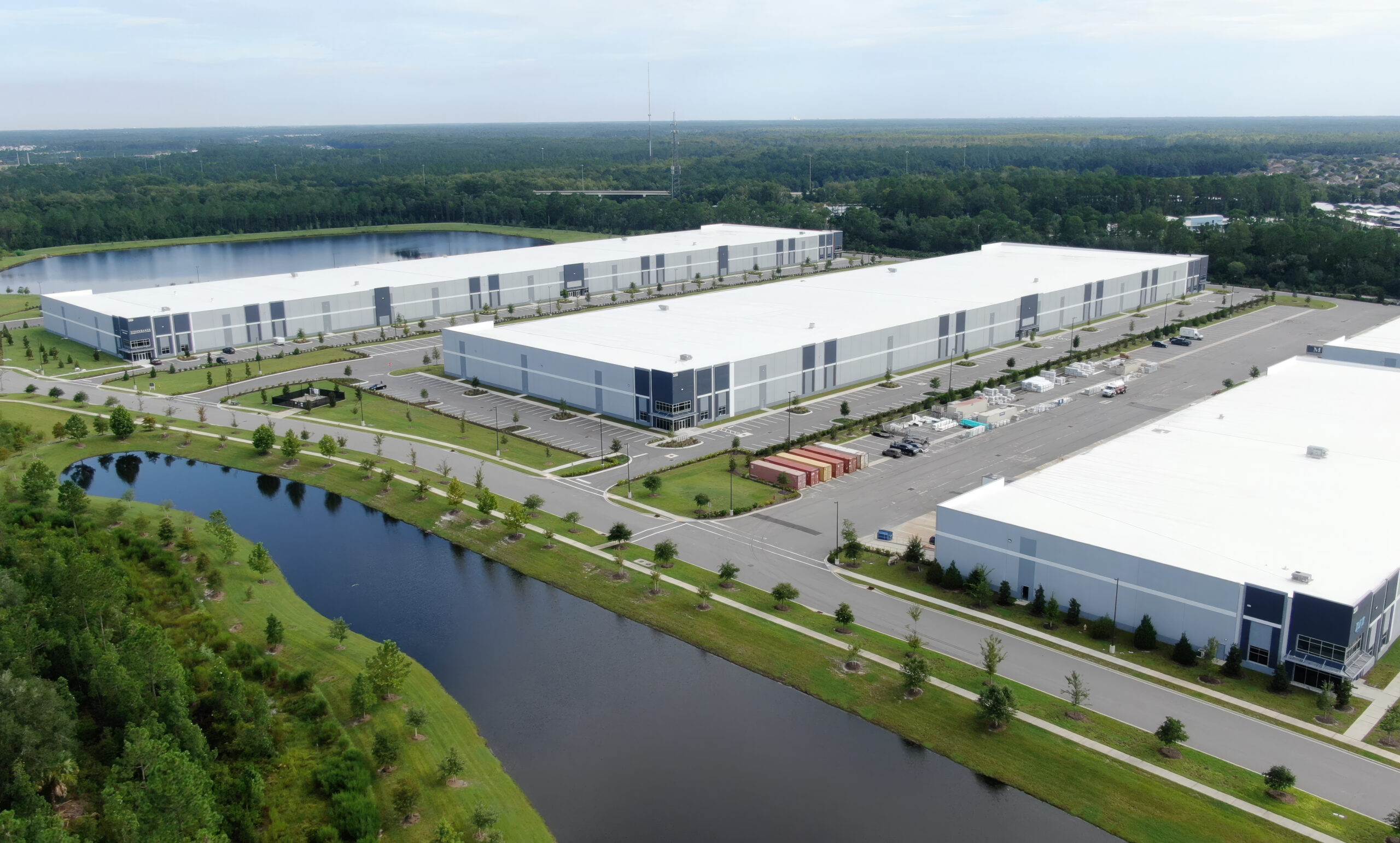
St. Johns County has become one of the most closely watched industrial submarkets in Northeast Florida. Fueled by explosive residential growth, major infrastructure investment, and a wave of new logistics development, the county is transitioning from a bedroom community into a strategic distribution hub along the I-95 corridor. Here’s what’s driving the market as of Q2–Q3 2026.
How much industrial space is in St. Johns County?
St. Johns County’s industrial submarket totals approximately 3.8 million square feet of inventory. While this makes it one of the smaller industrial submarkets within the greater Jacksonville MSA, it is also one of the fastest-growing, with new supply and demand both accelerating in recent quarters.
What is the current industrial vacancy rate in St. Johns County?
Industrial vacancy in St. Johns County currently stands at over 40%. This figure is significantly elevated compared to broader Jacksonville MSA averages, but it reflects a supply-driven dynamic rather than weak tenant demand. Two factors are primarily responsible:
- New development deliveries — recently completed buildings are still in active lease-up.
- Concentrated vacancy in the Elkton submarket along SR 207, which is skewing the countywide average higher.
As new inventory absorbs, vacancy is expected to trend downward over the coming quarters.
What are asking rents for industrial space in St. Johns County?
The most notable project currently in the pipeline is St. Johns Commerce Center, a new development from Davis and WDG Real Estate Partners located on Agriculture Center Drive. The project consists of six buildings totaling 309,600 square feet, adding meaningful modern industrial capacity to the submarket.
What notable industrial leases have signed in St. Johns County recently?
Several leasing transactions highlight the diversity of demand in the submarket:
- Wisenbaker signed for 56,000 square feet at Legend Point.
- World Electric signed for 31,000 square feet at IGP/95.
- Rivian signed for 48,000 square feet at IGP/95 for a high-tech electric vehicle service and demonstration center.
The Rivian lease is particularly notable. It represents a departure from traditional distribution and warehousing use, signaling that St. Johns County’s industrial product is beginning to attract specialized, higher-value tenants alongside standard logistics users.
What industrial investment sales have occurred in St. Johns County?
EastGroup Properties purchased Buildings 2 and 3 at Legend Point, totaling 175,000 square feet combined. Both buildings were fully leased at the time of sale, and the transaction priced at $215 per square foot. This sale underscores continued institutional investor confidence in the long-term value of St. Johns County industrial assets.
What size tenants are most active in St. Johns County?
St. Johns County is best suited for tenants seeking 10,000 to 50,000 square feet. Demand in this range is driven primarily by distribution operators supporting the county’s substantial residential and commercial growth, businesses that need to be close to the rooftops and retail centers they serve.
What is the outlook for industrial rents in St. Johns County?
Class-A industrial rents are expected to remain flat through the remainder of 2026 as the market absorbs recently delivered inventory. However, St. Johns County is likely to continue commanding a rent premium relative to comparable Northeast Florida submarkets for two structural reasons:
-
- Proximity to high-end residential neighborhoods, which limits available industrial-zoned land and increases its value.
- The county’s historically cautious approach to approving large-scale industrial development, which constrains new supply relative to demand.
Why is St. Johns County attracting industrial development?
St. Johns County has long been one of the fastest-growing counties in the United States. More than 30,000 new homes have been built in the county over the past five years, and industrial and commercial development has expanded to keep pace with that residential growth. What was once considered a quiet suburb of Jacksonville has evolved into a self-sustaining economic hub in its own right.
How will the First Coast Expressway impact the St. Johns County industrial market?
The planned connection of the First Coast Expressway to I-95 in St. Johns County is expected to be a major catalyst for future industrial and commercial activity. Once complete, the connection will:
- Significantly increase traffic flow between St. Johns County and Clay County.
- Allow trucking operations to bypass the Jacksonville central business district, saving an estimated 20 minutes per trip.
For companies managing heavy distribution traffic between Miami, Atlanta, and points further west, this improved connectivity will make St. Johns County an increasingly attractive — and in many cases essential — location for warehouse and distribution operations.
Key Takeaways
- St. Johns County’s industrial submarket totals 3.8M SF, with vacancy elevated above 40% due to new supply, not weak demand.
- Rents for new first-generation space range from $10.50–$15.00/SF NNN.
- St. Johns Commerce Center (309,600 SF) is the leading project in the current development pipeline.
- Recent leasing activity, including a Rivian EV service center, points to a diversifying tenant base beyond traditional distribution.
- EastGroup Properties’ $215/SF acquisition at Legend Point reflects strong institutional investor confidence.
- The First Coast Expressway’s connection to I-95 is poised to be a long-term catalyst, positioning St. Johns County as a strategic location for regional and interstate distribution.
For more insight into Jacksonville industrial real estate and available St. Johns County industrial opportunities, contact the NAI Hallmark Industrial Team.
- Jason Purdy jp@naihallmark.com
- Camden Padgett cp@naihallmark.com
Contact Us for Your Personalized CRE Solutions.
-
Topics:
- Owners & Investors
- Tenants
